
Journal
How We Turn an Emotion Into a Digital Artwork
Mar
This is the part we find hardest to explain — and the part we enjoy most.
How do you draw a feeling? Not a symbol of it. Not a cliché. Not a red heart for Love or a storm cloud for Anger. The actual texture of the emotion — what it feels like to be inside it.
We spent a long time thinking about that before we made a single image.
The answer we kept coming back to was this: feelings live in the body before they live in the mind. They’re physical, energetic, almost luminous. So we built a visual language around that idea.
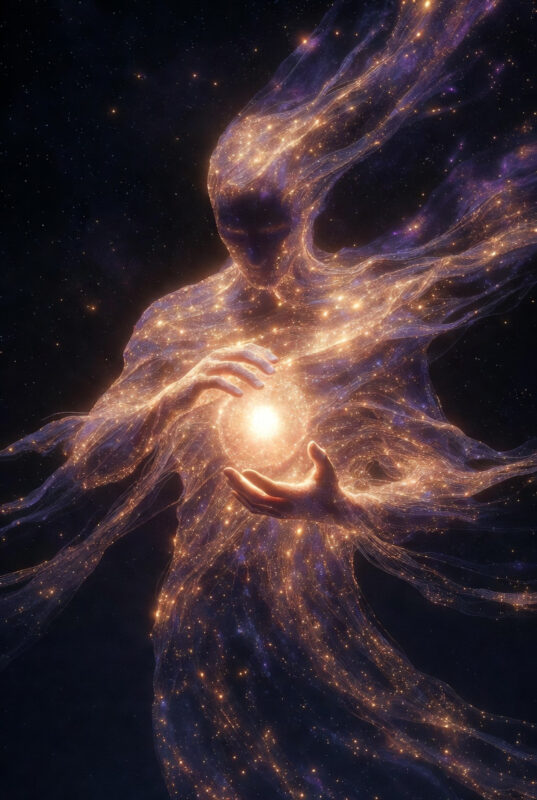
Every artwork in the feeling.gift collection follows the same quiet rules. A human figure — always faceless, always genderless — because the emotion belongs to everyone, not a specific person. Light that seems to come from within rather than from outside. Particles that drift and dissolve at the edges, as if the feeling is both present and always slightly escaping. A dark background that lets the light speak.
From there, each emotion gets its own identity. Mother’s Love is all warmth — rose gold, slow-moving light, figures close together. Rage is something completely different — sharp edges, deep crimson, particles that feel like heat. Grief is quiet and heavy, deep blue, a figure that seems to carry invisible weight.
We work with AI image generation to bring these to life, guided by detailed prompts we’ve developed over many iterations. The prompt is almost like a poem — describing not just what should appear, but how it should feel to look at.
It’s an imperfect process. Some emotions take many attempts to get right. Some surprise us completely.
But that’s also what makes it interesting. Figuring out what Longing looks like is not a quick answer. Neither is Courage, or Forgiveness, or Awe.
We’re still learning. But we think that’s part of the work.
feeling.gift — digital art for the moments that matter.